
Magic Tree-App Pro vs Screaming Pro: A Head-to-Head Sex Toy Wholesale Decision
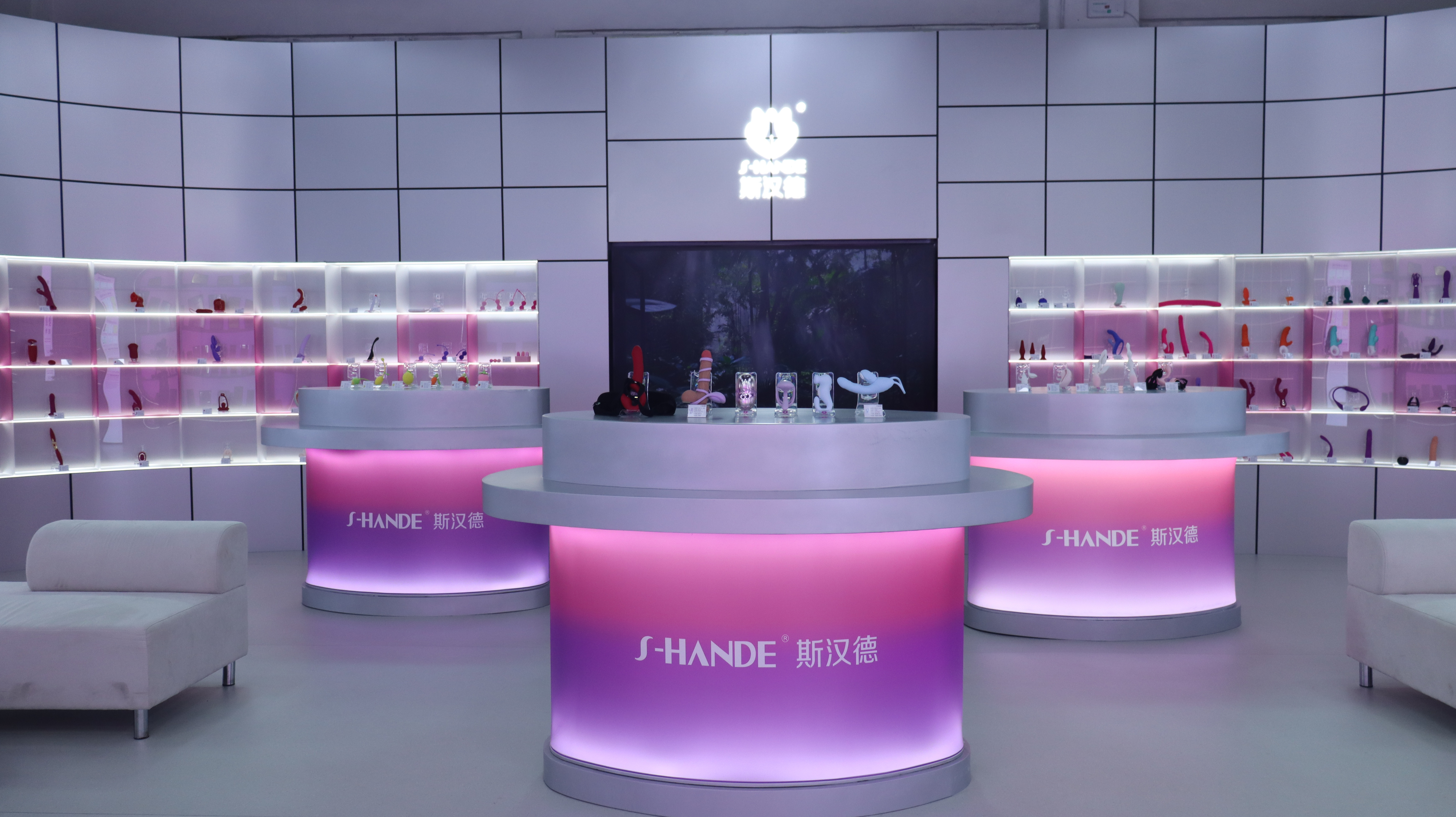
Magic Tree-App Pro and Screaming Pro are two S-HANDE product models that a wholesale buyer may shortlist for the same catalogue slot. The decision between them is not a vote for the better sex toy in the abstract. It is a decision about which model fits the audience you already sell to, the channel you fulfil through, and the paperwork you can produce when a marketplace, a distributor or a customs officer asks for it.
This comparison takes a deliberately narrow position on evidence. S-HANDE supplies both model names, and the company's manufacturing, material and quality platform is documented in detail. Model-level specifications for each SKU — motor, controls, battery, packaging, MOQ, lead time — belong to that model's product sheet and quotation. Where this article cannot verify a model-level attribute, it says so and converts the gap into a question you should put to the supplier in writing, rather than a claim you repeat on your own listing.
That framing is what makes the comparison usable at decision stage: what is already documented, what still needs confirming, and in what order to confirm it before you commit a purchase order to either direction.
A naming caution before anything else. "App" and "Screaming" are positioning cues inside two model names. They are not specifications. Do not infer app control, vibration intensity, motor type, battery format or waterproof rating from a product name, and do not let a copywriter do it either. Model names define spelling; the product sheet defines capability.
The problem: you are comparing documents, not product names
Two SKUs in one catalogue rarely compete on features alone. They compete for a slot: one facing on a retail fixture, one tile in an online grid, one line in a distributor's price list. Once that slot is defined in writing, most of the comparison collapses into a small number of answerable questions.
Three failure modes cause most of the damage in this kind of head-to-head.
Name-led buying. A buyer reads "App" as app-controlled and "Screaming" as high-intensity, then builds listings, photography briefs and staff training around that inference. If the delivered samples behave differently, the loss is not the sample cost. It is the rewritten listings, the reshot images, the retrained staff and the early reviews that mention a mismatch between the description and the product.
Platform-claim transfer. S-HANDE documents platform-level quality measures — material selection, overmolding, motor ageing tests, ingress protection, charging design. Those statements describe how the supplier builds a category of products. They are strong evidence about the supplier and weaker evidence about one specific SKU until that SKU's own sheet confirms them. Carrying a platform claim onto a model page you cannot support is a returns and compliance risk, not just a copy problem.
Channel mismatch. A model that suits a couples or gifting fixture is not automatically right for a male-focused online catalogue, and the reverse is equally true. Channel fit drives packaging, content, warranty wording and sometimes the compliance route itself: a wirelessly controlled or app-linked product raises radio-equipment questions that a non-connected product does not.
Category context that changes the decision
Three pieces of category context are worth carrying into the comparison, because each one shifts what you should weight.
Market size numbers are not a planning input at SKU level. Global Market Insights reported the global sex toys market at USD 49.1 billion for 2026. Other published 2026 estimates sit far below that figure, and the gap is largely a definitional difference between "sexual wellness" and "adult novelty" scopes. A buyer choosing between two SKUs should treat those figures as direction, not as a demand forecast for a single line.
Vibrators remain the volume anchor. The same source puts vibrators at roughly 29.4% of category share in 2024. That matters here only in one way: if either model is intended as the anchor of a range rather than a supporting SKU, it will be judged against vibrator expectations for motor behaviour and battery life.
Material choice is now a documented decision. SGS describes ISO 3533:2021, effective 29 September 2021, as the first international safety standard written specifically for sex toys, covering design, material safety and labelling. SGS also identifies porous materials such as TPE and PVC as the higher-risk option because of bacterial retention and potential phthalate content. For a wholesale buyer this converts "which feels nicer" into "which material can I declare, and can the supplier document it".
What S-HANDE documents before either model is discussed
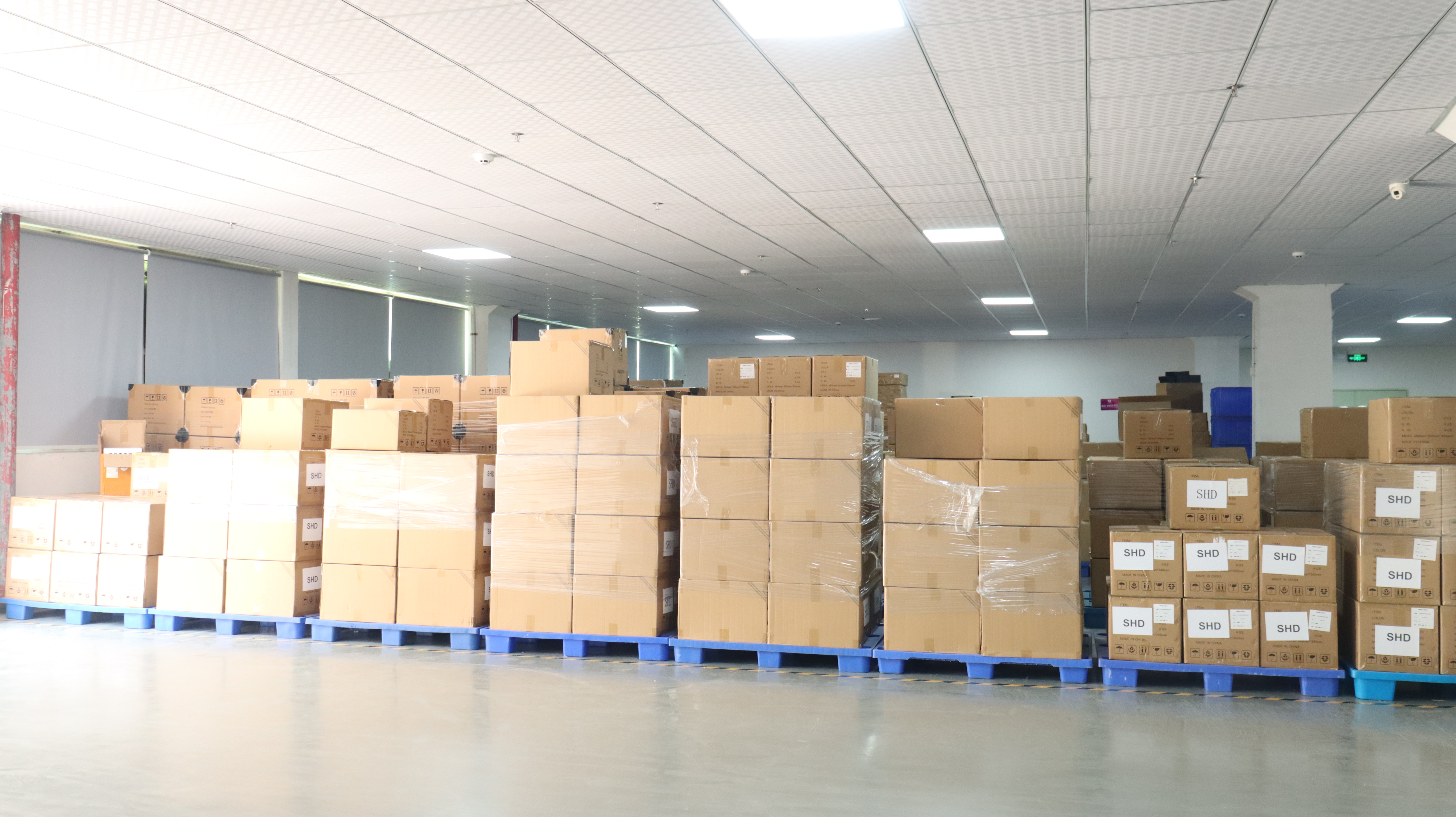
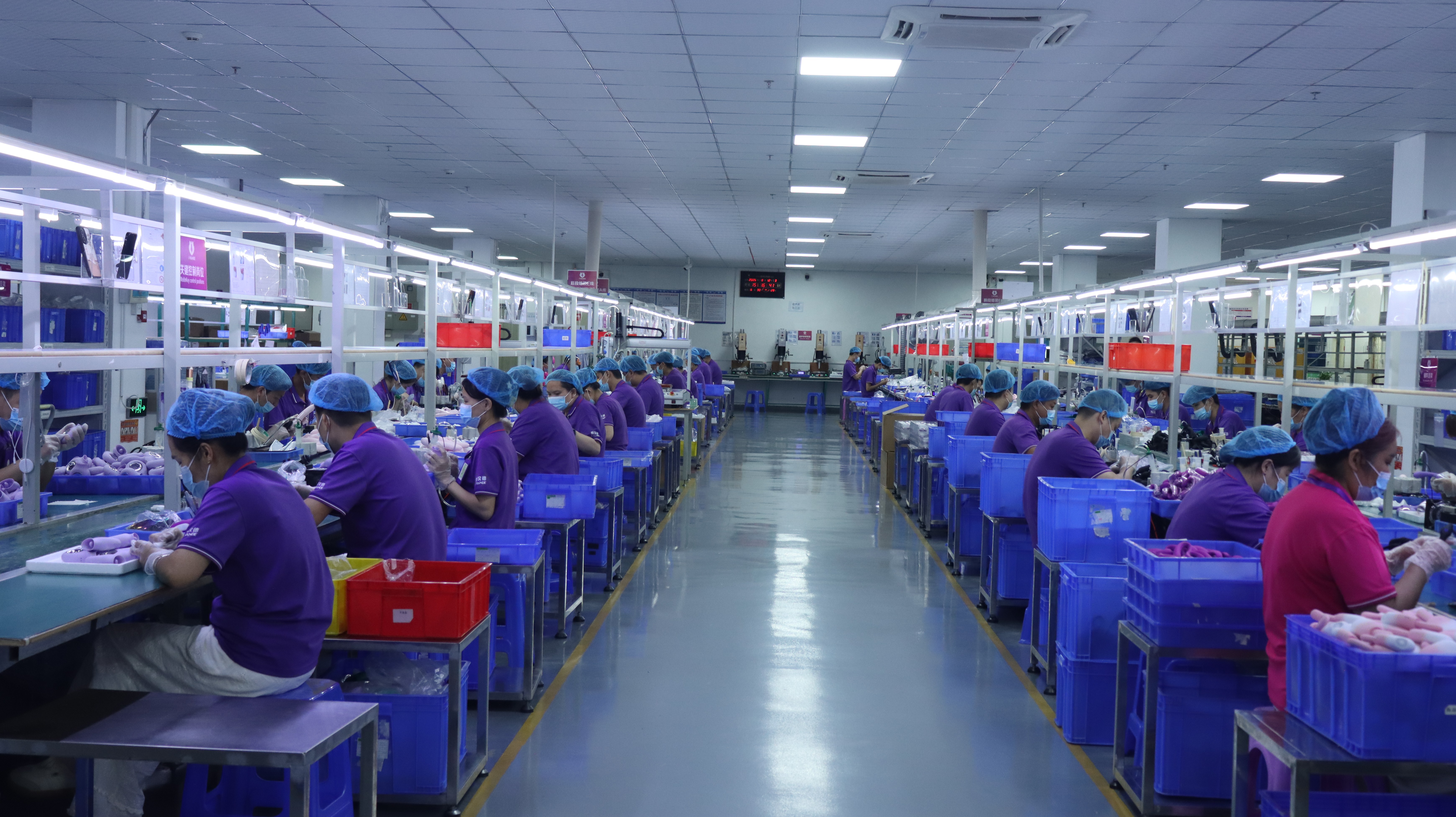
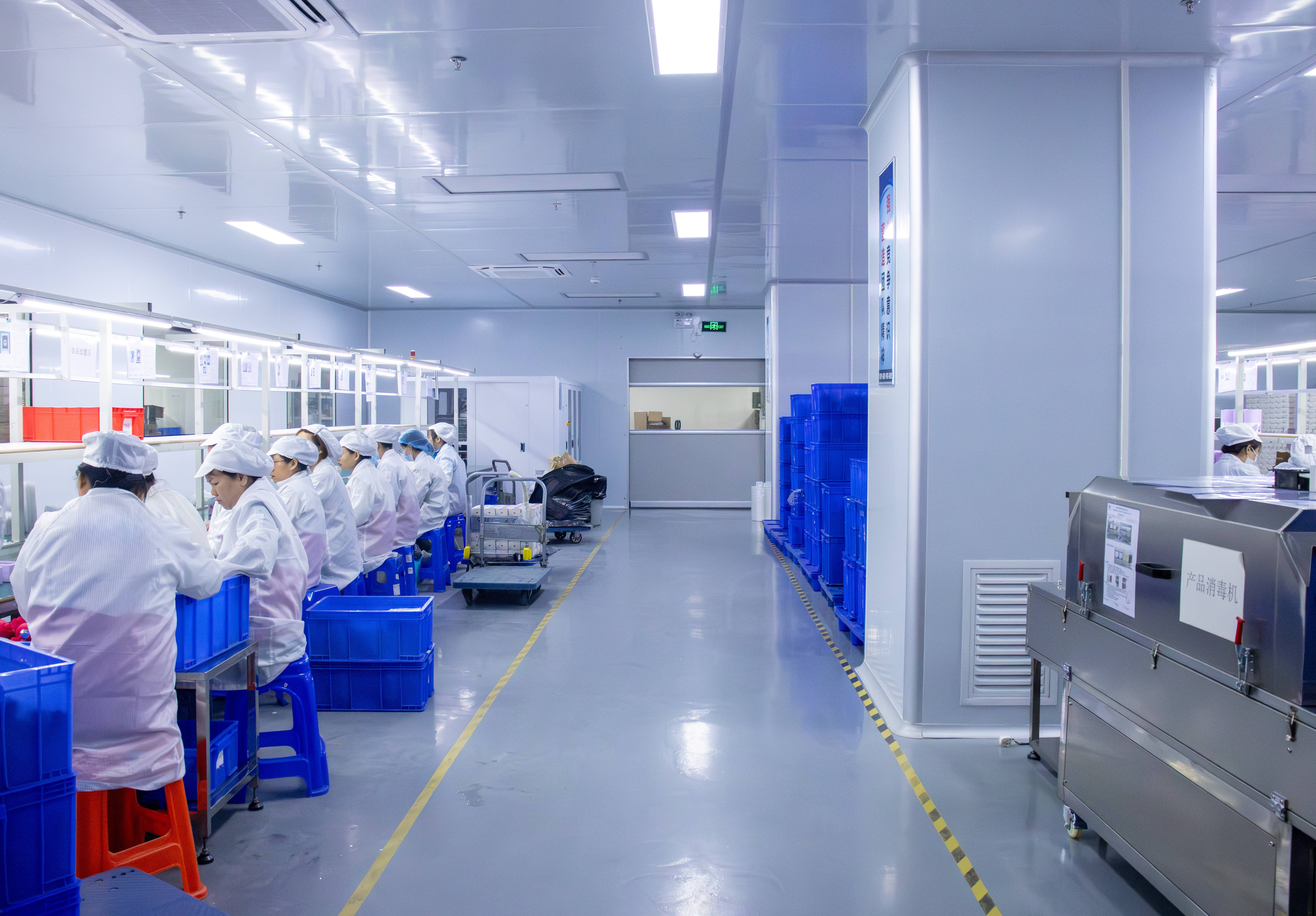
Shenzhen S-HANDE Technology Co., Ltd. (s-hande.com) is an intimate wellness designer and manufacturer founded in 2014, with brand heritage dating to 2009. The company operates a 15,000 m² facility with more than 500 employees and a stable annual output of 9.6 million units, and exports roughly 70% of production to customers in more than 70 countries across North America, Latin America, Europe, Japan, the Middle East, Central Asia, Southeast Asia, Russia and Africa.
Its product portfolio spans more than 10 categories and over 500 SKUs, covering vibrators, prostate massagers, butt plugs, cock rings, masturbators, dildos, strokers, pocket pussies, kegel balls, anal toys and couple toys. Development capacity is documented as 50+ R&D engineers across mechanical engineering, industrial design, electronics, materials engineering, intelligent algorithms and user experience design, launching 120+ new products a year against a base of 230+ independent patents, with an annual R&D budget above RMB 10 million.
S-HANDE's own comparison data, and how to read it
S-HANDE publishes comparison data positioning its products against mainstream same-category competitors. These are company-reported comparisons, not independently audited test results, so treat them as statements to verify rather than settled facts. They are still useful because they tell you what the supplier claims to have engineered, which is exactly what you then check on a sample.
- Material: liquid and food-grade silicone used where competitors mostly specify standard TPE, at roughly 12% higher material cost.
- Construction: full overmolding for a stronger silicone-to-plastic bond, at roughly 10–15% higher cost, aimed at reducing peel-off and water-damage repairs.
- Motor: a 30-hour cycling ageing test, against a competitor range of roughly 8–16 hours, with a claimed ~50% lower failure rate.
- Ingress protection: IPX7 support where competitors are mostly IPX4, making direct washing practical.
- Noise: operating noise measured around 55 dB and claimed 10–15 dB lower than mainstream comparators.
- Charging: magnetic charging with reverse-connection protection, claimed ~40% lower charging failure rate, plus USB-C fast charging with a claimed ~30% longer battery life.
- Consistency and cost: a claimed ~30% lower after-sales rate and ~5–10% lower overall cost, supported by reliability testing.
- Development speed: 1,000+ proprietary molds in stock, roughly 30% shorter new-product development cycles through modular platform reuse, and 200+ design renderings a year with about 50% reaching production.
Design capability is corroborated by external award records rather than self-description: a Red Dot Award: Product Design 2025 win for the Lock, and a Red Dot Award: Product Design 2024 win for the tryfun Rock Smart Vibrating Trainer. Neither award covers Magic Tree-App Pro or Screaming Pro, so it supports the supplier's design process, not the specification of either SKU.
Evaluation criteria: the eight questions that separate the two models
The comparison only becomes decision-grade when both models are scored on the same dimensions. The table below shows what is already documented at platform level, what must be confirmed for each model individually, and why the criterion carries weight in a wholesale decision.
| Criterion | Documented at S-HANDE platform level | Confirm per model | Why it decides the choice |
|---|---|---|---|
| Material and surface | Silicone-first material policy; full overmolding | Declared material and hardness for each SKU, in writing | Drives what you can declare on listing, cleaning instructions and return risk |
| Motor and drive | 30-hour cycling ageing test claimed | Motor type, speed or intensity levels, rated runtime | Defines the performance story the SKU can honestly carry |
| Ingress protection | IPX7 claimed across the range | Rated IP level per model, tested or designed to | Bathroom and washing claims are frequent return triggers when overstated |
| Charging | Magnetic charging with reverse-connection protection; USB-C fast charging | Connector type, charge time, cable included or not | Charging faults dominate after-sales tickets; cable policy affects packaging |
| Noise | ~55 dB measured, claimed 10–15 dB below comparators | Noise at maximum setting, measured the same way for both | Decides suitability for shared-space and night-time positioning |
| Controls and connectivity | In-house electronics and algorithm capability | Button layout, app pairing, supported OS versions, firmware update policy | Connected features add radio-compliance and data-handling obligations |
| Packaging and labelling | Design and tooling capability in house | Stock or custom packaging, languages, warnings, importer block | Market-entry requirement, not decoration; weak labels block retail listings |
| Commercial terms | Stable 9.6 million unit annual capacity | MOQ per SKU, lead time, price ladder, warranty, spare-part policy | Sets cash tied in stock and the cost of being wrong |
Step-by-step: how to run the head-to-head
1. Define the catalogue slot before you look at either model
Write one sentence naming the audience, the channel, the price tier and the physical or visual space the SKU will occupy. If you cannot name the audience in a single sentence, neither model will perform, because the listing copy will try to speak to everyone. This sentence later becomes the scoring rubric.
2. Request both model sheets in one identical format
Ask for the same fields for Magic Tree-App Pro and Screaming Pro: dimensions, weight, declared material, motor type and levels, battery capacity and runtime, charging interface and time, ingress rating, noise at maximum, control layout, packaging dimensions, carton quantity, MOQ, lead time and certification list with numbers. Identical templates prevent a false advantage created by paperwork asymmetry rather than engineering.
3. Verify every compliance claim against a document number
S-HANDE marketplace listings state IPX7 and CE, UKCA, EMC, RoHS and RED compliance for a silicone male product. Those are supplier claims in a listing, not certificates. Ask for the certificate number, issuing body and validity window for each, and for the test report behind the ingress rating. If either model includes wireless or app control, radio equipment compliance is directly relevant and should be confirmed rather than assumed from the category page.
4. Order paid samples of both, from the current production batch
Ask specifically for units from the running production batch, not engineering samples. Record the batch or date code when the samples arrive; it is the reference point if mass production later drifts.
5. Run a fixed protocol and score blind
Use the same seven checks on both models: surface feel after cleaning, control response at each level, noise at maximum measured the same way, charge from empty to full with timing, seal and seam inspection after washing, packaging drop test, and label accuracy against your market's requirements. Score before re-reading the model names, so the name does not drive the verdict.
6. Review packaging and labelling against the destination market
Check language coverage, age and warning statements, importer or responsible-person block, batch coding and retail barcode placement. For a connected product, add privacy and data-handling statements to the packaging review. These items are cheaper to fix at artwork approval than after import.
7. Settle commercial and after-sales terms in writing
Confirm MOQ per SKU, price ladder by quantity, payment terms, production lead time, sample lead time, warranty duration, dead-on-arrival handling, return authorisation process, spare-part availability and who holds the compliance file. Tooling ownership matters if you intend custom packaging or a modified shell: establish who owns the mould and what happens if the relationship ends.
8. Pilot one direction, measure, then scale
Launch a small order of the selected model, then review sell-through, return rate, review sentiment and support tickets after a fixed period. If both models genuinely serve different audiences, keep both but differentiate them clearly in copy and packaging so they do not cannibalise each other's listings.
Use cases: which direction fits which catalogue
The following are conditional examples, not reported customer cases. They show how the same two model names resolve differently once the slot is defined.
| Buyer and channel | Evaluate first | Naming signal to test, not a spec | First three questions to send |
|---|---|---|---|
| EU online retailer building a connected, content-led range | Magic Tree-App Pro | The name points toward a connected or app-adjacent direction | Is there an app, and which OS versions are supported? Which radio-compliance documents exist? How is user data handled? |
| Distributor with a male-focused catalogue and performance-led positioning | Screaming Pro | The name points toward an intensity or performance-led direction | What is the motor specification? What is the measured noise at maximum? What runtime is rated? |
| Couples and gifting retail chain | Both, then one | Gifting decisions are driven by packaging and price ladder more than by specification | What packaging options exist per model? What is the carton configuration? What price ladder applies at our volume? |
Where the decision usually lands
Most wholesale buyers end up choosing on catalogue coherence rather than on a feature sheet. If your range already carries a strong male-focused, performance-led story, adding a second direction can dilute staff knowledge and split marketing spend; the same logic applies in reverse. A single well-documented SKU with verified claims and clean packaging often outperforms two half-supported ones.
The counter-argument is supply resilience. S-HANDE's own comparison data states that a one-stop, full-category supply relationship saves roughly 15–20% of the coordination cost of working across multiple factories, and that mould and platform reuse shortens development cycles by around 30%. Those are company-reported figures and should be tested against your own landed cost, but the underlying logic holds: consolidating both SKUs with one verified supplier reduces coordination overhead, while consolidating with one supplier and one SKU reduces risk the least.
What this comparison does not establish. It does not establish that either model outperforms the other on motor, noise, battery, ingress protection or app function, because those are model-level attributes that must be documented per SKU. It also does not establish that S-HANDE outperforms any named competitor on independently tested performance; the platform comparisons above are supplier-reported. Both gaps are closed with documents and samples, not with stronger wording.
FAQ
Which compliance documents should I request before listing either model in the EU or UK?
Use ISO 3533:2021 as the reference framework: SGS describes it as the first international safety standard written specifically for sex toys, covering design, material safety and labelling. Then request, per model, the certificate number, issuing body and validity window for every CE, UKCA, RoHS and EMC claim, plus a material declaration naming silicone or TPE. If the model includes wireless or app control, add radio equipment documentation and a data-handling statement. S-HANDE's own IP Management System Certification (certificate 498251P05820ROM, compliant with GB/T 29490-2023, valid 30 December 2025 to 29 December 2028) indicates a formal IP process, but it is not a product safety certificate and should not be presented as one.
Can S-HANDE support private label, packaging and product modification on these models?
Development capacity supports the request: 50+ R&D engineers, 120+ new products a year, 230+ independent patents, 1,000+ proprietary moulds and 200+ design renderings annually with roughly half reaching production. Design credibility is also externally recorded through a Red Dot Award: Product Design 2024 win for the tryfun Rock Smart Vibrating Trainer and a 2025 win for the Lock, plus the 24th Shenzhen Corporate Innovation Record (12 November 2025) for multi-frequency intelligent massage technology. What must be confirmed per model is commercial, not developmental: MOQ for custom packaging, artwork approval steps, whether the existing mould can be reused or a new one is needed, and who owns that mould.
How should I compare cost between the two models if unit prices differ?
Compare landed cost, not unit price: product cost plus packaging, compliance testing, freight, duty, and expected return and after-sales cost. S-HANDE's comparison data puts food-grade silicone at roughly 12% higher material cost and full overmolding at roughly 10–15% higher, offset by a claimed 30% lower after-sales rate and 5–10% lower overall cost. Treat those as supplier-reported and weight them by channel: return-heavy online channels should weight reliability data, while gifting channels should weight appearance and packaging finish, where the same data claims an above-norm appearance standard. No price for either model is published in the material reviewed here, so request a quotation at your target volume before comparing.
What should I check on a sample before committing to a wholesale order?
Run a fixed protocol on both models: surface feel after cleaning, control response at each level, noise at maximum measured identically, charge time from empty to full, seam and seal inspection after washing, a packaging drop test, and label accuracy for your market. Ask that samples come from a current production batch. Also clarify scope on quality marks: the Shenzhen "Three Sames" Product certification (certificate SZSTRD-25-0011, valid 28 December 2025 to 28 December 2028) names a certified S-HANDE brand massager as its product scope, so confirm explicitly whether it extends to the specific SKU you are buying.
What lead-time and after-sales questions should be settled before the first purchase order?
Settle production lead time per SKU, sample lead time, MOQ per model and per packaging variant, payment terms, warranty duration, dead-on-arrival handling, return authorisation process and spare-part availability. Confirm who holds the compliance file and how quickly it can be reissued for a new market. No lead time is published in the material reviewed here, so these must come from a written quotation. Capability context for the conversation: S-HANDE operates a 15,000 m² facility with 500+ employees and a stable 9.6 million unit annual output, serves customers in over 70 countries, and holds industry recognition including a Guangdong High-Value Trademark Brand designation with a brand valuation of RMB 165.60 million, a 2025 International Brand Award from Asia Adult Expo, and a Certificate of Contribution from EroExpo 2024.
Conclusion
Choosing between Magic Tree-App Pro and Screaming Pro is a documentation exercise with a commercial decision attached. Define the slot, request both model sheets in one format, verify every compliance claim against a certificate number, sample both from a current production batch, score blind against your channel criteria, and settle commercial and after-sales terms before the first order. Whichever direction survives that sequence is the one your listing can defend.
S-HANDE's platform evidence — 15,000 m² of manufacturing, 9.6 million units of annual capacity, a silicone-first material policy, a 30-hour motor ageing test and IPX7 ingress claims — tells you how the supplier builds. It does not tell you what either model does. That last step belongs to the model sheet and the sample, and it is the step that decides the order.
If you want to move from comparison to a written quotation, the S-HANDE company profile and product portfolio are available in the downloadable company brochure. Send your target market, volume and packaging requirement, and request the model sheets for Magic Tree-App Pro and Screaming Pro together so both can be scored on the same criteria.
Have Questions or Need More Details?
Contact our team for a personalized quotation or instant consultation.
Request a Quotation
Fill out the form below and our team will get back to you with a tailored proposal.
WhatsApp Direct Chat
Prefer to chat in real-time? Message us on WhatsApp for instant assistance & quick answers.
- Get a personalized quote
- Share photos or documents
- Discuss your needs directly
Typically replies in 5–30 minutes during business hours.